Most companies fail at workforce planning because they only look a few months ahead. McKinsey reports that only 12% of businesses plan three years out. This lack of foresight causes talent gaps and expensive HR compliance errors.
Today, managing human resources involves more than simple talent acquisition. You must use people analytics to fight burnout and manage AI shifts. 36% of employees feel dissatisfied with their work experience right now.
Focusing on employee engagement helps you keep your best talent. Successful leaders are managing human resources by using data to drive every single choice.
Building a Workforce Planning System That Works Beyond the Next Quarter
Most managers think about next month. You need to think about next year. Managing human resources means seeing problems before they happen.
1. Why Annual Workforce Plans Are No Longer Enough
Annual plans fail often. McKinsey found that 73% of groups do basic workforce planning. Only 12% link it to future needs. Reacting to gaps takes 18 months. You need a 90-day plan and a 3-year skills map.
Managing human resources gets easier when you account for AI changes. Executives expect to reduce headcounts by 20% within three years. You must plan for these shifts now.
2. How to Build a Skills-Based Workforce Model
To build a skills-based model, stop hiring for titles and start hiring for capabilities. Managing human resources effectively requires these four steps:
Audit: Identify current skills through people analytics.
Forecast: Map future needs against AI shifts.
Classify: Determine if you should "hire, develop, or automate."
Mobilize: Use your onboarding process to create internal growth paths.
This approach improves employee retention and ensures you are managing human resources with a future-ready team.
3. Workforce Data Every HR Professional Must Track Monthly
Track these metrics monthly:
Voluntary attrition rates by department.
Performance management scores.
Internal mobility rates.
Managing human resources requires keeping these numbers steady. High-performer turnover shows if your human resource management guide works well. These numbers tell you if your strategy works or if you need to fix your rules.
Compliance-First HR Management Strategies for Multi-State Workforces
Legal risks grow fast when you are managing human resources across different states. You need sharp HR management strategies to handle remote teams without hitting legal traps. Staying on top of HR compliance saves your company from massive fines.
1. The Expanding Employment Environment in 2026
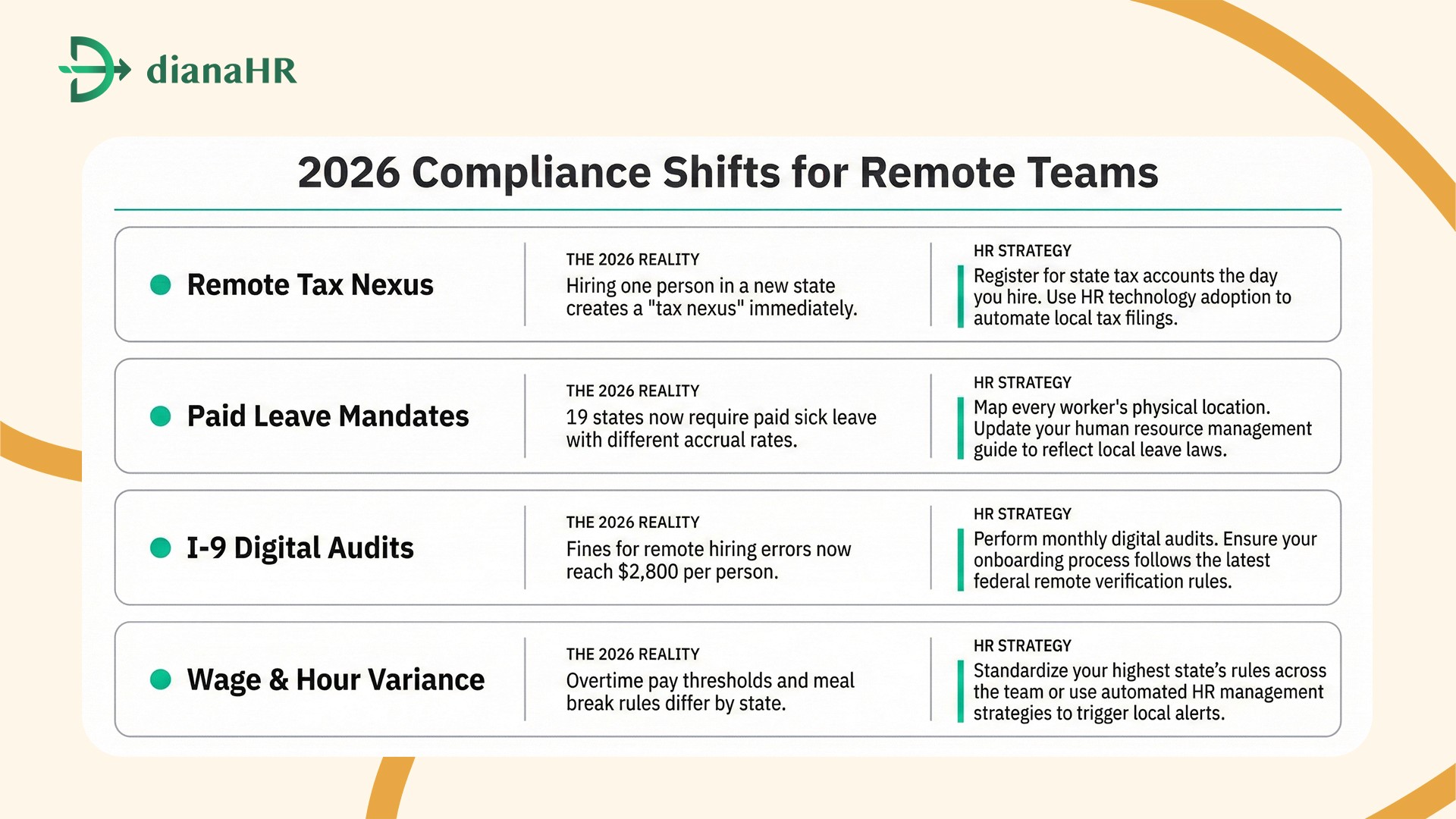
By 2026, 19 states require paid sick leave and 13 have passed paid family leave laws. When managing human resources, you must verify where every person actually works. A staff member in California has different overtime rules than one in Florida.
This human resource management guide suggests updating payroll settings every quarter to match these shifts. Managing human resources effectively requires this level of detail to protect the business.
2. Common Compliance Failure Points
Federal and state agencies have increased their focus on digital work records. Many firms struggle when managing human resources because they rely on outdated filing systems.
I-9 Mistakes: Accepting the wrong papers or missing a date costs up to $2,789 per person.
Misclassification: Calling a worker a contractor when they are an employee triggers audits.
Tax Nexus: Remote workers create a "nexus" in their home state. You must register for taxes in every state where you have an employee.
3. Building a Compliance Calendar That Prevents Reactive Fire-Fighting
Treat your calendar as a living document to beat deadlines. Managing human resources works best when you set aside time for specific audits each season to ensure total HR compliance.
Q1: Update your onboarding process and handbook for new state laws.
Q2: Audit your HR technology adoption to find and fix payroll errors.
Q3: Reconcile taxes and check for mid-year minimum wage hikes.
Q4: Confirm benefits and COBRA notices before the year ends.
This proactive style of managing human resources keeps your human resource management strategies effective. Staying ahead of legal shifts ensures your business remains protected and stable.
Multi-State HR Compliance Action Plan:
Managing Human Resource Performance and Retention With Data
A solid legal foundation is just the start. To keep your team growing, you must focus on managing human resources through a lens of continuous feedback and hard numbers. Managing human resources without data is like driving in the dark; you won't know where you are until you hit a wall.
1. Why Performance Management Systems Break Down
Most performance management systems fail because they rely on once-a-year chats that happen too late to fix real problems. McKinsey reports that 26% of workers received zero formal feedback last year.
When managing human resources, you should ditch the annual review for monthly check-ins. This shift ensures your talent acquisition efforts aren't wasted on high-performer turnover caused by silence.
2. Retention Strategies That Address Root Causes
Burnout is a major threat, with 66% of workers reporting it in 2026. Managing human resources effectively means addressing workload intensity rather than just offering pay raises.
Recognition: Tie praise to specific business wins to boost employee engagement.
Pathways: Use your onboarding process to show new hires a 3-year growth plan.
Exit Interviews: Treat departure data as a tool for workforce planning to stop the bleed.
3. People Analytics That Skilled HR Professionals Use
Skilled leaders use people analytics to predict when someone might leave 90 days before they actually quit. Managing human resources requires you to track the employee retention rates of specific managers to find hidden issues.
Offer Acceptance Rate: If this is below 60%, your hiring process has a bottleneck.
Absenteeism: Sudden spikes often signal a drop in employee engagement before people start quitting.
Managing human resources with these metrics gives you the clarity to build a stable team. Managing human resources through data-backed decisions leads directly to choosing the right tools for your business.
How DianaHR Helps You Manage Human Resources Effectively
Modern businesses need tools that simplify managing human resources without adding complexity. DianaHR acts as an AI-powered partner to streamline your human resource management strategies while cutting costs by 60%.
We remove the burden of repetitive admin work, allowing you to focus on growth and employee retention.
Special Capabilities:
AI-Driven Compliance: Automates payroll taxes and state registrations for multi-state managing human resources.
Expert Support: Pairs you with an HR specialist to handle onboarding and HR compliance policies.
Seamless Sync: Integrates with Gusto, ADP, and Rippling so you keep your current tools.
Smart Automation: Saves 15+ hours weekly by automating manual managing human resources tasks.
These features turn managing human resources into a streamlined, data-driven process. Explore how DianaHR simplifies your operations and helps you scale → DianaHR
Conclusion
Managing human resources effectively is the backbone of any stable business. However, many leaders face massive pain points in managing human resources, such as manual data entry and shifting state laws.
Failing to fix these gaps leads to crippling lawsuits and tax penalties that can shut your doors overnight. Without a solid system, your top talent will abandon you for competitors who actually value their time.
DianaHR fixes this by automating your compliance and payroll. We allow you to manage human resources with total confidence and zero administrative waste.
Connect to DianaHR today to see how we help you manage human resources with precision and total ease.
FAQs
1. What does managing human resources involve in 2026?
Managing human resources now involves complex workforce planning, talent acquisition, and performance management. You must integrate people analytics into your onboarding process to improve employee engagement. Strategic leaders focus on managing human resources by aligning skill sets with business goals to ensure long-term success.
2. What are the biggest human resource management challenges in 2026?
The biggest challenges include employee retention and HR compliance for remote teams. Managing human resources is difficult when 66% of workers report burnout. You need strong human resource management strategies to navigate managing human resources while balancing AI-driven headcount shifts and talent scarcity.
3. How is AI changing how HR professionals manage human resources?
AI automates manual tasks, allowing you to focus on managing human resources strategically. HR technology adoption helps with skills-based hiring and payroll automation. Managing human resources with agentic AI reduces administrative work by 60%, letting you prioritize employee engagement and high-level strategy.
4. What skills do HR professionals need to manage human resources effectively in 2026?
You need data literacy to master people analytics and workforce planning. Effective managing human resources requires deep knowledge of HR compliance and performance management. Success comes from managing human resources with the ability to turn complex workforce data into actionable growth plans.
5. How important is compliance when managing human resources across multiple states?
It is vital. Managing human resources across states requires tracking local sick leave and tax rules. A single HR compliance error can trigger expensive audits. Use a human resource management guide to maintain consistency while managing human resources in a complex, multi-state environment.
6. What HR metrics should every skilled HR professional track in 2026?
Track your voluntary attrition, time-to-fill, and internal mobility rates. Managing human resources effectively requires monitoring employee engagement and performance management scores. By managing human resources with these metrics, you can predict turnover and optimize your talent acquisition strategy for better results.
Share the Blog on: