By 2026, your employee handbook is a digital tool. The market for this software hit 500 million dollars recently. Most firms update their onboarding policies to cover AI usage policy and remote work rules. Data shows the Department of Labor recovered over 225 million dollars from businesses with bad policies.
This proves that handbook compliance is a big deal. An employee handbook sets the culture for your team. It protects your business and keeps your staff focused. This policy guide helps you stay ahead. Use this guide to build a strong employee manual today. It makes your life easier.
Why a Modern Handbook is Your Best Defense
An employee handbook does more than just list company holidays. It serves as your primary tool for handbook compliance and risk management. When you document your workplace conduct rules clearly, you prevent small misunderstandings from turning into expensive lawsuits.
Think of your employee manual as a contract that sets the tone for professional behavior and operational safety.
1. Minimizing Legal and Financial Risk
Prevent Litigation: Explicit anti-harassment and non-discrimination policies create a legal shield.
Update Bias Rules: You must address AI-bias to stay compliant with 2026 labor standards.
Audit Protection: A signed acknowledgment form proves your team received and understood the rules.
2. Standardizing Culture for Hybrid Teams
Maintaining a shared culture is hard when people work from different time zones. Your policy guide acts as a central hub for remote work rules. It defines how people should communicate on Slack or Zoom. This consistency helps everyone feel like they belong to the same team, regardless of their physical location.
3. Boosting Retention Through Transparency
Employees stay longer when they know what to expect. A clear benefits overview and defined career paths build trust. Transparency around pay and promotions can increase your retention rates by 20%. When you provide easy access to this information, you show your team that you value their time and their future.
A solid defense starts with clear communication, but you also need to include the right technical details.
Critical Sections for Your 2026 Policy Guide
Every employee handbook needs specific chapters to stay relevant. Your handbook creation process must focus on modern challenges like data security and flexible schedules. Using a compliance checklist helps you verify that your employee manual meets current laws.
1. Foundation and Conduct
Your onboarding policies should start with your mission and a clear workplace conduct section. State your equal opportunity rules clearly to ensure handbook compliance. This part sets the behavioral standard for every person on your payroll.
2. The New Normal Essentials
AI Usage Policy: Define which tools employees can use. Prohibit sharing trade secrets with public AI models to keep your intellectual property safe.
Data Privacy: Set remote work rules that cover home office security. Explain how to handle sensitive data when working from a cafe or a home network.
Flexible Framework: Be specific about core hours and equipment stipends. Employees need to know exactly when they must be online.
3. Benefits, Leave, and Wellness
Provide a full benefits overview that includes mental health days and PTO rules. List your disciplinary procedures so everyone knows the consequences of policy breaks.
Finally, include an acknowledgment form at the end. This ensures every worker confirms they read the employee handbook.
"Train people well so they can leave, treat them well so they don't." — Richard Branson
These chapters form the backbone of a professional workplace.
A Step-by-Step Guide to Handbook Creation
Building an employee handbook takes a planned approach to ensure handbook compliance. You should follow a clear compliance checklist to avoid missing local or federal laws.
This policy guide helps you move from a blank page to a finished employee manual that protects your team.
Phase 1: Planning and Legal Research
Audit the latest labor laws in your area. Use digital tools to find rules that apply to your specific industry. This research ensures your onboarding policies meet current standards. Check for new rules regarding pay transparency and sick leave.
Phase 2: Drafting with a Digital-First Mindset
Keep your employee handbook simple and easy to read. Use active voice and avoid complex legal jargon. Structure the document for mobile phones so remote staff can check remote work rules on the go. Visual aids help explain disciplinary procedures better than long blocks of text.
Phase 3: Review and Cultural Alignment
Share the draft with your legal team. Ask a few employees to read it and give feedback. This ensures your workplace conduct rules match your actual company culture. A policy guide only works if people actually understand and follow it.
Phase 4: Launch and Acknowledgment
Roll out the final employee manual through your HR software. Every worker must sign an acknowledgment form to verify they read it. This creates a digital trail that helps you during future audits or disputes.
Phase 5: The Annual Update Cycle
Review your employee handbook every year. Pay attention to your AI usage policy as technology changes fast. Set a calendar reminder to check your benefits overview for any necessary tweaks.
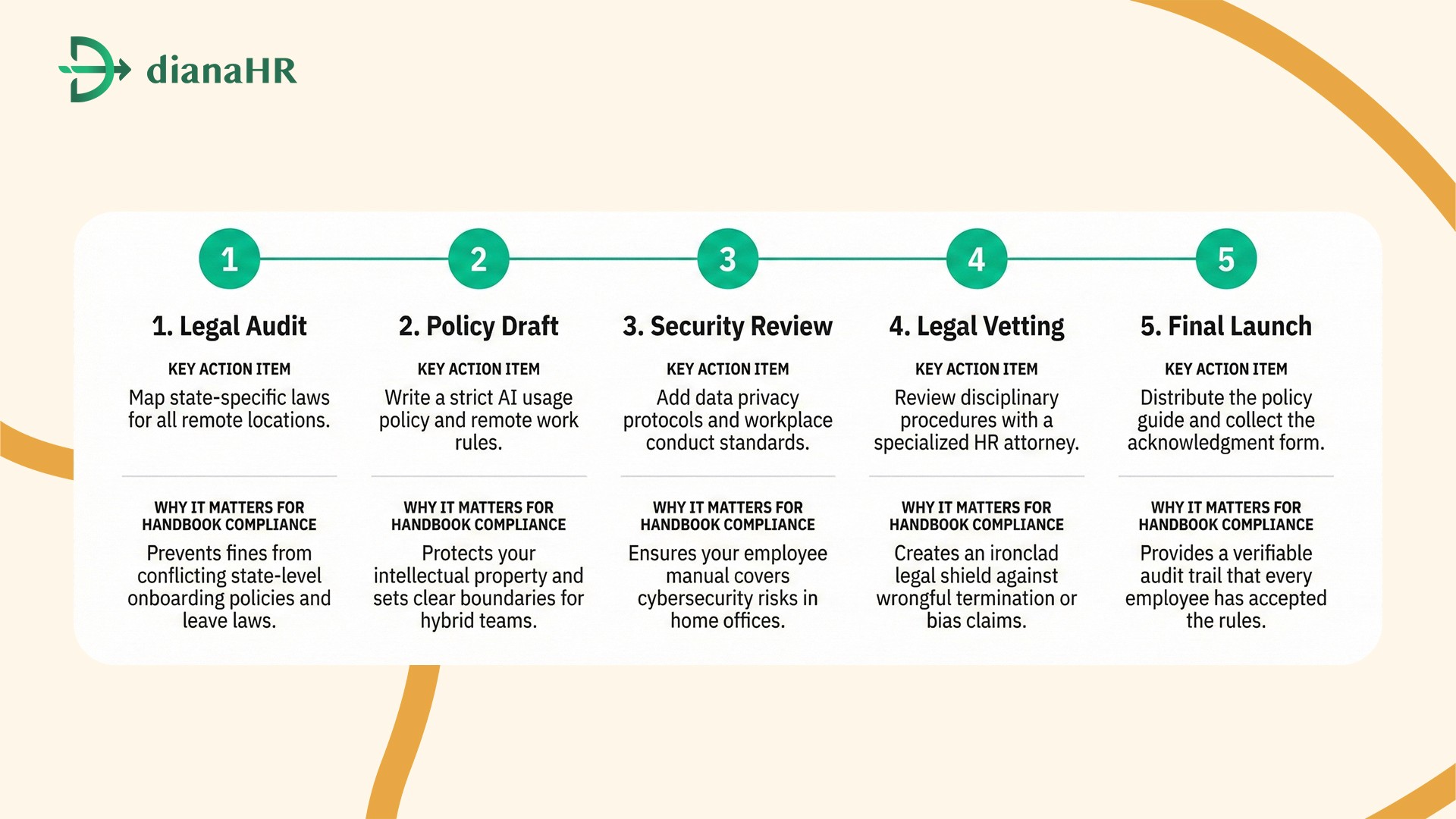
Following these steps makes your handbook creation process smooth and professional.
Simplifying Policy Management: How DianaHR Automates Multi-State Handbook Compliance
DianaHR simplifies handbook creation for small and mid-sized businesses. This AI-powered tool reduces HR costs by 60% and saves you 20 hours every week. It keeps your employee manual accurate across 40 states without the manual stress.
Why Choose DianaHR for Your Policy Guide?
AI-Driven Compliance: Automatically manages taxes and benefits for your onboarding policies.
Human Expertise: You get a dedicated specialist to handle your employee handbook and people operations.
Easy Integration: Works with Gusto, ADP, and Rippling so you don't have to switch tools.
Smart Automation: Cuts manual work by 60% on all your handbook compliance tasks.
DianaHR turns handbook creation into a fast, data-driven process Explore how DianaHR simplifies handbook compliance and helps your business scale faster → DianaHR
Conclusion
An employee handbook keeps your business organized and safe. However, many owners struggle with handbook creation because laws change fast. Failing to maintain handbook compliance across multiple states is a massive risk.
One small mistake in your onboarding policies or remote work rules can lead to devastating fines and lawsuits that drain your bank account. You cannot afford to leave your employee manual to chance or use an outdated policy guide.
DianaHR solves these problems by automating your compliance needs. We manage your workplace conduct rules and AI usage policy so you never miss a legal update.
Connect to DianaHR to automate your handbook compliance and build a better employee handbook today.
FAQs
1. What is an employee handbook?
An employee handbook is a central policy guide that outlines company values, workplace conduct, and legal rights. It streamlines handbook creation by defining onboarding policies and disciplinary procedures, ensuring every staff member understands their role and the firm's expectations clearly.
2. What are the key 2026 sections?
Your employee manual must include an AI usage policy, remote work rules, and a benefits overview. These sections ensure handbook compliance regarding data privacy and hybrid work. Don't forget an acknowledgment form to verify that employees read the document.
3. How often should I update it?
Update your employee handbook at least once a year. Regular handbook creation reviews help you stay current with changing labor laws and handbook compliance standards. Constant updates to your compliance checklist prevent legal risks as your business scales and grows.
4. Why is handbook compliance important?
Maintaining handbook compliance protects your business from expensive lawsuits and Department of Labor audits. A solid employee manual with clear disciplinary procedures and onboarding policies creates a legal shield. It ensures your workplace conduct rules are enforceable in any state.
5. How does DianaHR help with handbook creation?
DianaHR automates handbook creation by tracking shifting laws across 40+ states. It ensures your policy guide stays updated with the latest remote work rules and AI usage policy. This smart tool saves you time while guaranteeing your handbook compliance.
Share the Blog on: