The HR technology market hit $42.5 billion in 2025. This growth happened because 85% of companies use HR tech for core operations. Still, 83% of staff say their software overlaps. This creates a mess for you.
You need a human resource management system that works in 2026. Experts project a 327% increase in AI use to fix these software gaps. Your platform must offer payroll automation and compliance tracking.
This guide shows you three top HRM tools to manage people. Reliable HR management tools help you focus. Use better HRM tools to get your time back.
What HR Managers Actually Need From HRM Tools in 2026
Managers today waste hours on manual entry. Most teams use five different platforms for one worker. This creates data silos and errors. You need a human resource management system that puts everything in one place. Modern HRM tools must bridge these gaps to save time.
The Operational Gaps That Drive HR Managers to Switch Platforms
Disconnected software is why managers switch. Handling payroll in one spot and reviews in another leads to mistakes and audit risks. HR management tools should stop this friction.
The 2026 Feature Standard
Your HRM tools should include these basics:
Payroll automation and compliance tracking.
Employee self-service to cut down on emails.
Workforce analytics for real-time data.
Performance management software for quick reviews.
A unified HRIS platform simplifies talent management and onboarding automation. Clear benefits administration and an HR reporting dashboard remove the guesswork. These HRM tools help you lead.
See our top three platform picks next.
Top 3 HRM Tools for HR Managers in 2026
Choosing the right human resource management system determines your team's daily speed. You need HR management tools that handle the heavy lifting while you focus on strategy.
Quick Glance: Top 3 HRM Tools for HR Managers in 2026
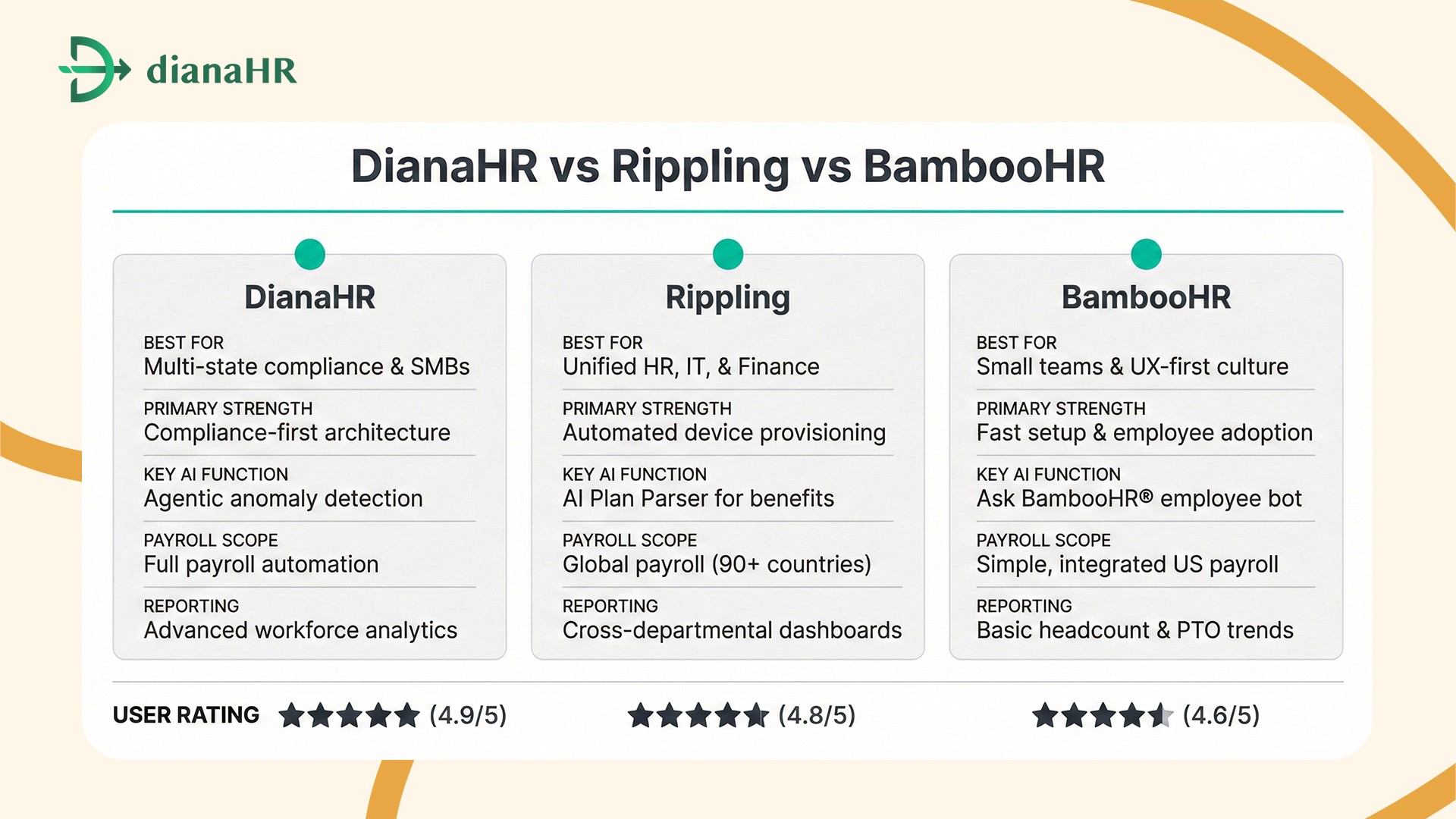
These HRM tools lead the market in 2026 because they offer deep payroll automation and reliable compliance tracking.
1. DianaHR
DianaHR provides a compliance-first HRIS platform tailored for mid-market companies. It unifies onboarding automation and workforce analytics into one dashboard.
This specific human resource management system ensures your team stays audit-ready without manual data entry.
Key Features:
Automated payroll automation with multi-state tax filing support.
A robust HR reporting dashboard for real-time workforce analytics.
Integrated benefits administration and employee self-service portals.
USP: DianaHR uses agentic AI to catch 100% of payroll anomalies before they process. This human resource management system reduces administrative labor costs by 40% for high-turnover industries.
Why Choose DianaHR: You should choose DianaHR if you manage workers across multiple states. These HRM tools update automatically as local labor laws change, protecting you from expensive fines.
Clients Review: ⭐⭐⭐⭐⭐ (4.9/5)
2. Rippling
Rippling serves as a unified HRIS platform that manages your workers, hardware, and finances. It syncs every change to a single record, making talent management and global payroll automation fast for growing companies.
Key Features:
Unified onboarding automation that ships laptops and sets up app access instantly.
Global payroll automation across 90+ countries with built-in compliance tracking.
Custom workforce analytics and an HR reporting dashboard for cross-departmental visibility.
USP: Rippling connects HR data with IT and Finance to replace 5+ separate HR management tools. Organizations report saving 20 hours a week on administrative tasks using this human resource management system.
Why Choose Rippling: Choose Rippling if you need to manage remote teams and IT equipment alongside your HRM tools. This system automates the most tedious parts of talent management by linking employee data to their digital tools.
Clients Review: ⭐⭐⭐⭐⭐ (4.8/5)
3. BambooHR
Overview: BambooHR acts as a simplified HRIS platform that focuses on the human side of small business operations. It streamlines onboarding automation and talent management with a clean, light interface that employees actually enjoy using daily.
Key Features:
Employee self-service that allows staff to manage time off and personal data without emailing HR.
Built-in performance management software to replace long annual reviews with frequent check-ins.
Mobile-first workforce analytics that provide headcount and turnover trends at a glance.
USP: BambooHR saves managers an average of 1.5 hours every single day by automating repetitive data entry. Using this human resource management system can reduce time-off management costs by up to $40,000 annually for mid-sized teams.
Why Choose BambooHR: You should pick BambooHR if you lead a team of 50 to 500 people and value a fast setup. These HRM tools prioritize a "culture-first" experience over complex enterprise configurations, making them ideal for growing startups.
Clients Review: ⭐⭐⭐⭐⭐ (4.6/5)
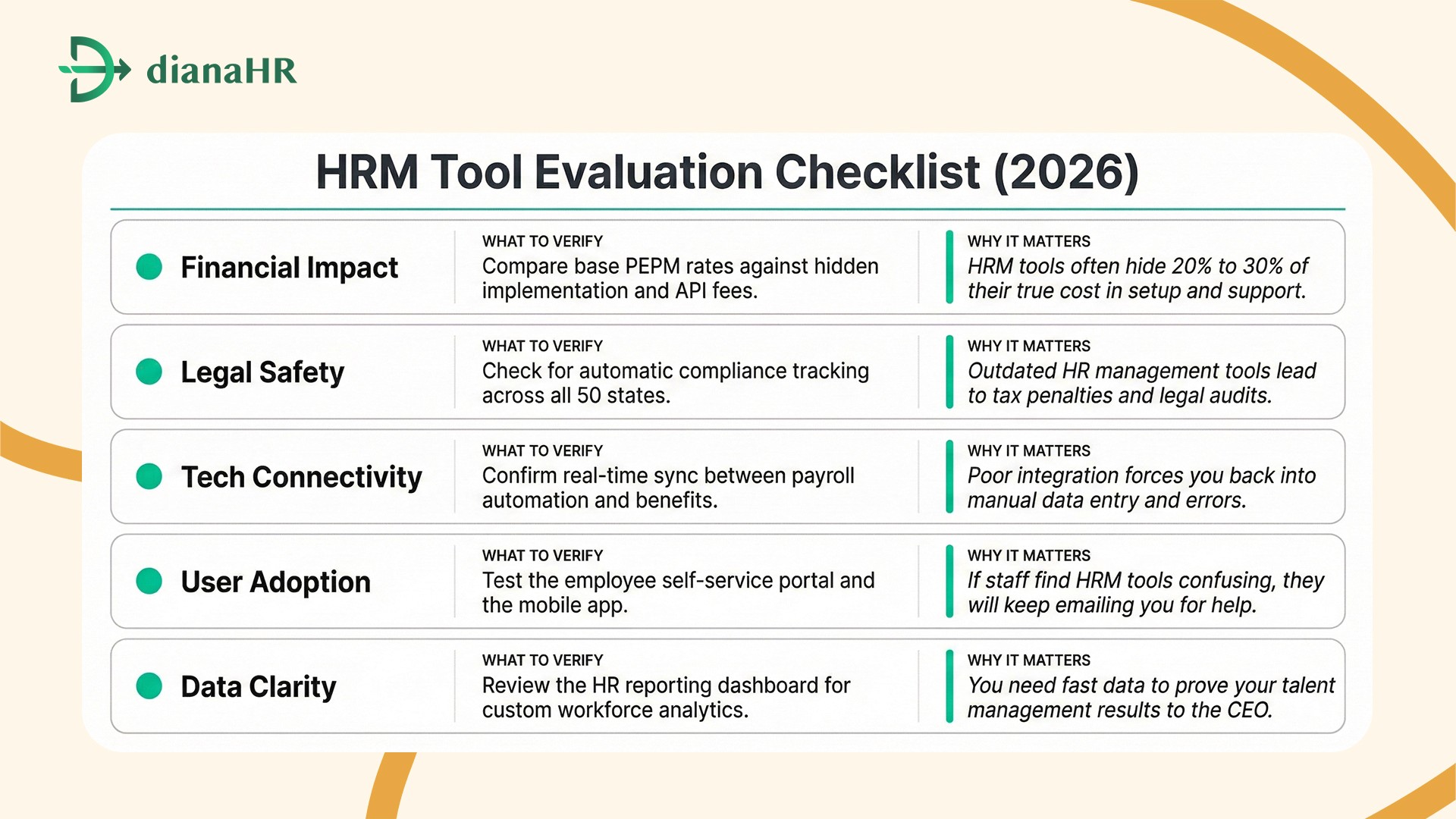
How to Evaluate HRM Tools Before You Commit to a Platform
Finding the right human resource management system requires looking past the flashy sales demo. You must verify that your chosen HRM tools actually solve your team's specific bottlenecks without adding new costs. Reliable HR management tools provide clear ROI by fixing manual errors.
1. Total Cost of Ownership Goes Beyond the Per-Employee Price
Most HRM tools show you a low monthly rate, but hidden fees can break your budget. Implementation often takes two to four months of work. You must account for data migration, staff training, and API costs for your other software.
A unified human resource management system typically costs 15% to 25% less over five years than using separate tools. Look for HRM tools that offer transparent pricing without hidden module charges.
2. Compliance Coverage for Multi-State Workforces
Managing a distributed team means following a patchwork of rules. By mid-2026, states like Delaware, Maryland, Maine, and Minnesota will enforce new mandatory paid family leave.
Your HRM tools must update these tax codes automatically. If your human resource management system fails to track these changes, you face heavy legal fines. Pick HR management tools that send you proactive alerts for new state laws.
3. Integration Depth With Your Existing HR Tech Stack
Poor integration causes 47% of AI software failures in HR departments. Your payroll automation must sync perfectly with your benefits administration. If your HRM tools don't talk to each other, you end up doing manual data reconciliations again.
Check the integration depth of your HRIS platform before you sign any contract. Reliable HRM tools keep your data clean across every department.
Choosing a platform is the first step toward a smoother workday.
Conclusion
Modern HRM tools help you lead, but the wrong human resource management system is a high-risk liability. Fragmented data and manual compliance tracking create constant chaos for busy managers.
Selecting weak HRM tools often leads to audit failures, heavy tax penalties, and massive payroll errors that ruin employee trust. One simple mistake results in lawsuits.
You cannot afford these risks. DianaHR fixes this by combining reliable payroll automation with human expert support. Our platform protects your business and gives you back your time.
Let’s connect with DianaHR and discover how the right HRM tools automate your compliance and payroll today.
Frequently Asked Questions
1. What are HRM tools and what do they do for HR managers?
HRM tools serve as a centralized human resource management system to automate talent management. These HR management tools handle payroll automation, compliance tracking, and onboarding automation. Using an HRIS platform gives you real-time workforce analytics and an HR reporting dashboard for better decisions.
2. What is the difference between HRIS, HRMS, and HCM?
An HRIS platform stores basic data. A human resource management system (HRMS) adds payroll automation and onboarding automation. HCM includes these plus complex performance management software. Most HRM tools in 2026 combine these into one unified HR reporting dashboard for efficiency.
3. How much do HRM tools typically cost in 2026?
Most HRM tools use a monthly per-employee fee. Basic HR management tools start at $8, while advanced HRM tools with workforce analytics and benefits administration reach $38. Transparent HRIS platform pricing prevents hidden costs during your payroll automation setup and implementation.
4. What features should HR managers prioritize when choosing HRM tools?
Prioritize HRM tools with automated compliance tracking and payroll automation. Ensure your human resource management system includes employee self-service and onboarding automation. A robust HR reporting dashboard with workforce analytics is essential for tracking talent management and team productivity goals.
5. Are HRM tools suitable for small businesses, or just large enterprises?
HRM tools help businesses of all sizes. Small teams use a human resource management system to manage payroll automation and compliance tracking without a large staff. Modern HR management tools offer onboarding automation and employee self-service that scale as your company grows.
Share the Blog on: