Global market data shows HR management software hit $27.51 billion in 2024. Experts project this will reach $60.52 billion by 2030. Today, 74% of organizations use cloud-based HR systems. Another 62% improved their workforce analytics recently.
Finding the right HR management software impacts payroll automation and retention. This guide reviews the top options for 2026. You will find the best human resource management system for your team here. We ranked five platforms by features and scalability to help you choose.
Top 5 HR Management Software Platforms of 2026
These five platforms lead the market. They offer strong features and help businesses stay compliant. Each human resource management system listed below shows proven results for its users.
1. DianaHR
Overview: DianaHR provides an all-in-one human resource management system for modern teams. It automates payroll automation and tracks laws. Its new AI agent handles tasks like state tax registration and complex employee data entry instantly.
Key Features:
Compliance tracking with real-time AI alerts for payroll gaps.
Employee self-service portal for easy benefits and document access.
Automated onboarding software that executes tasks without manual input.
Best For: Small and mid-market businesses that need a full-cycle human resource management system to handle operations without hiring extra staff.
Services Offered: Payroll automation, compliance tracking, onboarding software, employee benefits administration, workforce analytics, HRIS system.
Industries Catered: Healthcare, Professional Services, Retail, Technology, Manufacturing.
Clients Review: ⭐⭐⭐⭐⭐ (5/5 stars)
2. Rippling
Overview: Rippling unifies HR, IT, and finance through this robust HR management software. It automates the employee lifecycle while ensuring global payroll automation. This platform manages 100+ countries with real-time accuracy and speed.
Key Features:
Automated device and app provisioning during onboarding software workflows.
AI-powered anomaly detection built into this HR management software.
Integrated multi-state payroll with March 2025 compliance tracking updates.
Best For: Mid-to-large companies that need a unified human resource management system to manage HR, IT, and finance under one roof.
Services Offered: Payroll automation, compliance tracking, onboarding software, employee benefits administration, workforce analytics, HRIS system, Device Management, App Provisioning.
Industries Catered: Technology, Financial Services, Healthcare, Retail, Professional Services.
Clients Review: ⭐⭐⭐⭐⭐ (4.9/5 stars)
3. BambooHR
Overview: BambooHR simplifies HR tasks through an intuitive HR management software designed for growth. It focuses on the employee experience while automating core payroll automation and culture-building tasks. You can manage people data easily without complex training.
Key Features:
Employee self-service portal that centralizes time-off and documents.
AI-powered "Ask BambooHR" to answer employee FAQs instantly.
Integrated performance management tools for consistent feedback.
Best For: Small businesses and growing teams that want a user-friendly human resource management system with quick setup times.
Services Offered: Payroll automation, compliance tracking, onboarding software, employee benefits administration, workforce analytics, HRIS system, performance management tools.
Industries Catered: Non-profits, Marketing Agencies, Education, Technology, Professional Services.
Clients Review: ⭐⭐⭐⭐ (4.6/5 stars)
4. Workday
Overview: Workday provides a high-end human resource management system for complex, global organizations. This HR management software integrates workforce planning with financial data. It uses advanced AI to predict performance trends and manage large-scale talent acquisition.
Key Features:
Talent management platform using AI to match skills with internal roles.
Predictive workforce analytics that help leaders plan future hiring.
Enterprise-grade payroll automation that supports diverse global tax laws.
Best For: Large enterprises and Fortune 500 companies requiring a scalable human resource management system that connects HR with finance.
Services Offered: Payroll automation, compliance tracking, onboarding software, employee benefits administration, workforce analytics, HRIS system, talent management platform, performance management tools, Financial Management.
Industries Catered: Finance, Healthcare, Government, Manufacturing, Technology, Higher Education.
Clients Review: ⭐⭐⭐⭐⭐ (4.8/5 stars)
5. ADP Workforce Now
Overview: ADP Workforce Now provides a dependable human resource management system for growing mid-market companies. This HR management software excels at handling complex tax filings and automated payroll automation. It utilizes deep data insights to improve your overall compliance.
Key Features:
Advanced compliance tracking that covers multi-state labor laws and taxes.
Mobile-first employee self-service portal with AI-driven voice assistance.
Integrated employee benefits administration to simplify open enrollment and tracking.
Best For: Mid-market businesses that prioritize payroll reliability and need a robust human resource management system with strong compliance infrastructure.
Services Offered: Payroll automation, compliance tracking, onboarding software, employee benefits administration, workforce analytics, HRIS system, talent management platform, performance management tools.
Industries Catered: Manufacturing, Hospitality, Construction, Retail, Healthcare, Professional Services.
Clients Review: ⭐⭐⭐⭐ (4.5/5 stars)
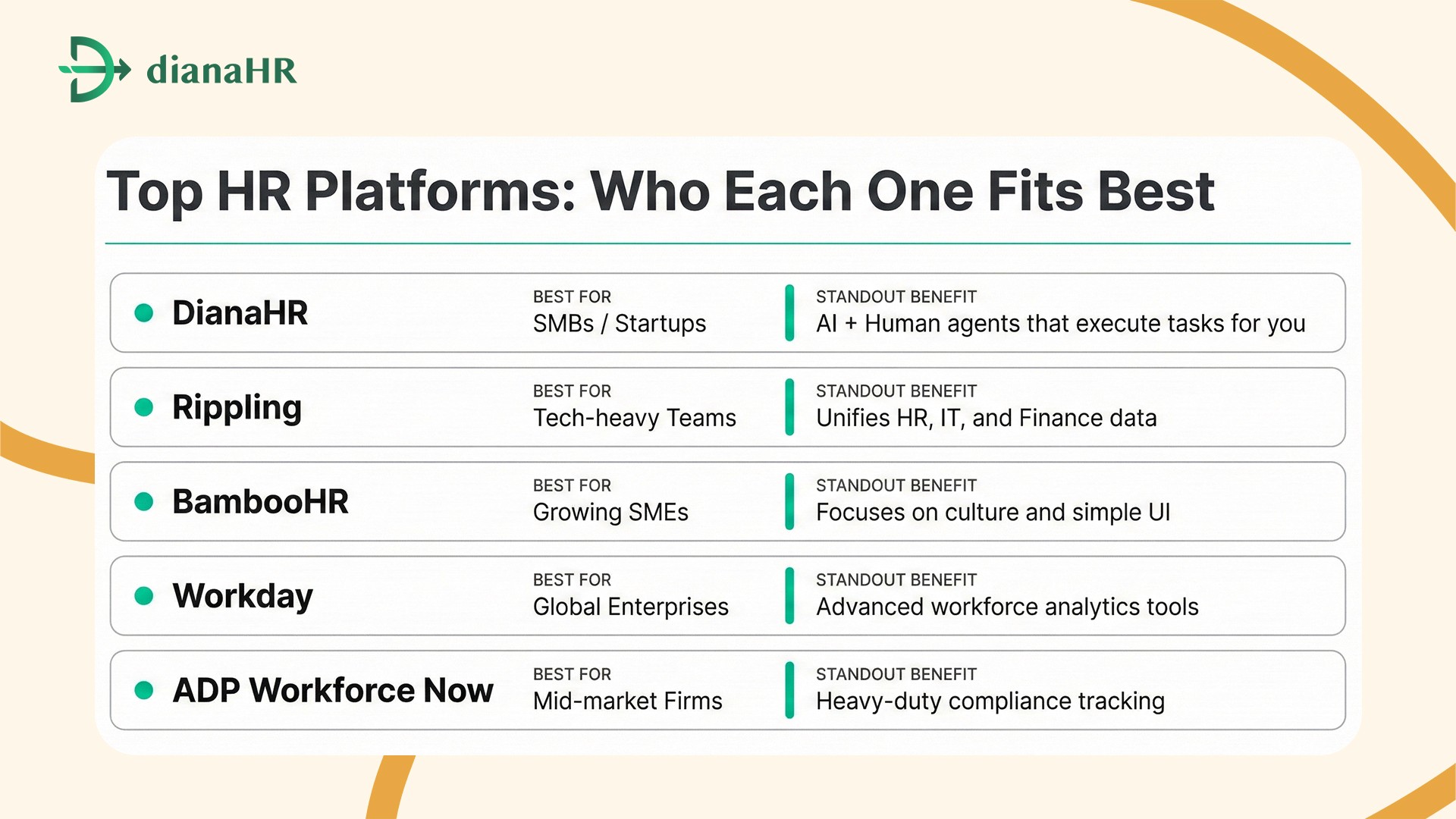
2026 HR Management Software Comparison:
What Separates Good HR Software from Great HR Management Software
Selecting the right HR management software means looking beyond simple data storage. A great human resource management system acts as a proactive partner that saves time and prevents errors.
It should solve problems before they start while keeping your team focused on growth.
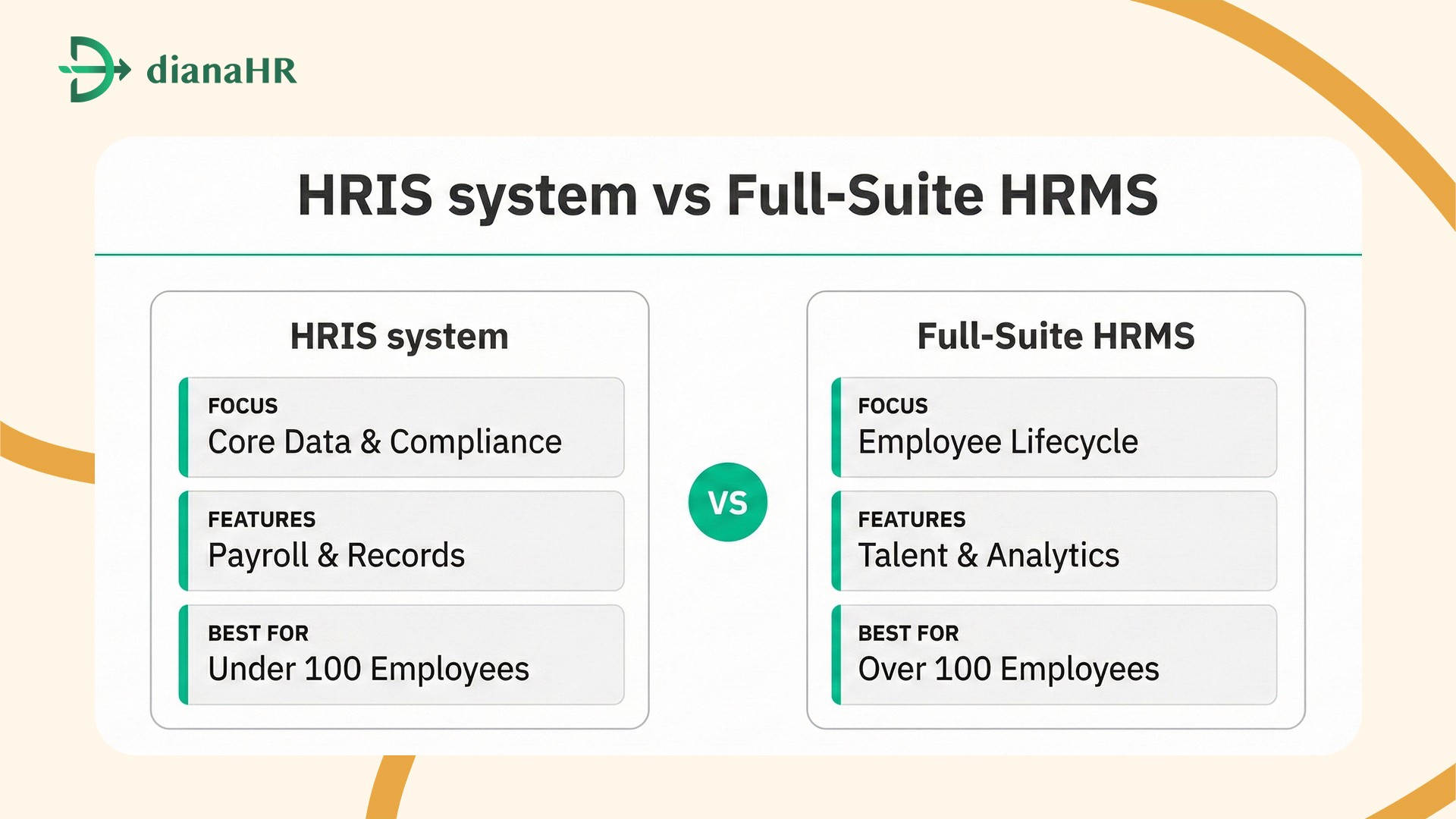
1. Core HRIS vs. Full-Suite HRMS: What Your Business Actually Needs
Choosing between a basic HRIS system and a full-suite HRMS depends on your team size and goals. A basic HRIS system manages records and compliance tracking for smaller teams.
Larger companies need a full HRMS to handle onboarding software and performance management tools together.
2. AI and Automation Capabilities That Actually Move the Needle
Modern HR software for businesses now uses agentic AI to handle manual work. Great HR management software uses payroll automation to flag errors instantly. You should prioritize tools that offer a smart employee self-service portal to reduce HR tickets. These systems use workforce analytics to predict turnover and help you make better decisions.
3. Compliance and Data Security: The Criteria Most Buyers Under-Evaluate
Security remains a top priority for cloud-based HR platforms in 2026. A strong human resource management system must protect sensitive data while tracking changing labor laws. Look for a talent management platform that includes automated employee benefits administration and deep security audits. This ensures your HR management software stays secure as you scale.
These factors help you identify which platform fits your specific operational needs.
How to Choose the Right Human Resource Management System for Your Business Size
Finding the right HR management software depends on your headcount and growth plans. A small startup needs a different human resource management system compared to a global firm.
You should evaluate how each platform handles payroll automation and daily tasks before committing to a contract.
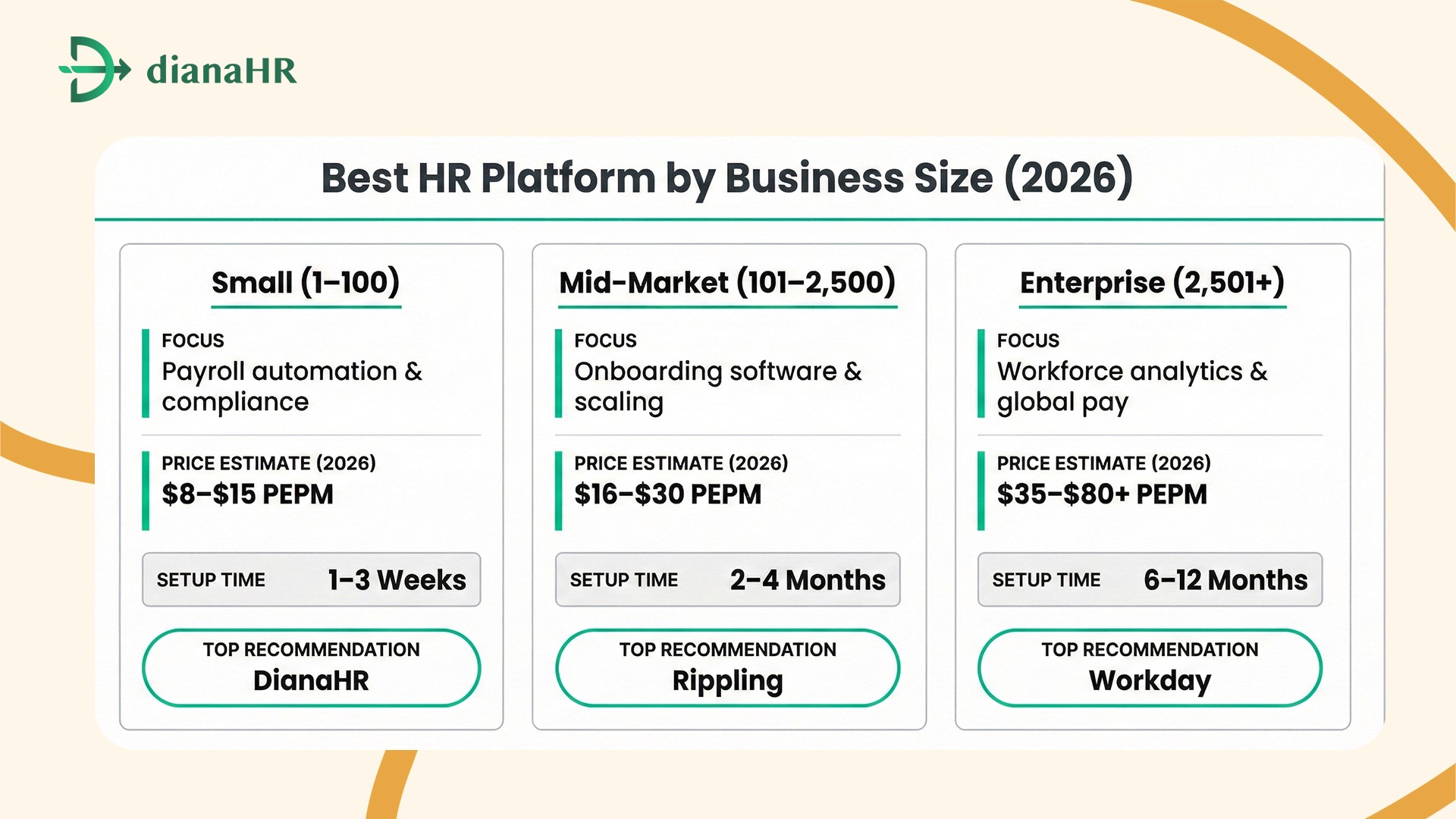
1. HR Software for Small Businesses (Under 100 Employees)
Prioritize payroll automation and simple user interfaces to save time.
Choose a cloud-based HR tool like DianaHR or BambooHR for fast setup.
Focus on automated compliance tracking to avoid expensive tax penalties.
2. HR Management Software for Mid-Market Companies (100–2,500 Employees)
Mid-market firms need a human resource management system like DianaHR or Rippling to balance power with ease of use. You require workforce analytics and onboarding software to manage hiring without manual errors.
These teams use HR management software to handle payroll automation across multiple states. A strong employee self-service portal ensures efficiency while keeping compliance tracking and employee benefits administration inside one HRIS system.
3. Enterprise HR Management Software (2,500+ Employees)
Large organizations demand a global human resource management system like Workday or ADP Workforce Now that connects with financial systems and a talent management platform. Enterprise HR management software focuses on workforce analytics and payroll automation for thousands of workers.
Choosing Your Human Resource Management System by Size
These firms rely on cloud-based HR suites for performance management tools. Success requires an HRIS system that remains secure while keeping the human resource management system compliant with international laws.
Conclusion
Picking the right HR management software comes down to three questions: what functions cost your team the most time, where your compliance risk is highest, and if you need to scale.
DianaHR covers all three by offering payroll automation, compliance tracking, and full-cycle operations on one platform. If you want to cut HR overhead and build a reliable human resource management system, book a free DianaHR demo today.
Frequently Asked Questions
1. What is HR management software and what does it do?
HR management software is a digital platform that centralizes HR functions like payroll automation, employee records, and onboarding software. It replaces manual spreadsheets with automated workflows. The right human resource management system reduces administrative work for HR teams while improving accuracy across tax filings and regulatory compliance tracking.
2. What is the difference between HRIS system, HRMS, and HCM?
An HRIS system stores and manages core employee data. An HRMS adds workflow automation and performance management tools. HCM covers the full employee lifecycle, including workforce analytics and planning. DianaHR operates as a full human resource management system with enterprise-level features accessible without a complex contract.
3. How much does HR management software cost in 2026?
Most HR software for businesses platforms charge per employee per month (PEPM). Basic HRIS system tools start around $6–$10 PEPM, while full-suite platforms like Rippling run $26–$38 PEPM. Enterprise suites usually require custom contracts. DianaHR offers transparent pricing with full access to payroll automation and no hidden fees.
4. Is cloud-based HR software secure enough for sensitive employee data?
Cloud-based HR software generated 72.4% of market revenues in 2024, showing high trust. Leading human resource management system platforms use SOC 2 Type II certification and full audit trails. Before selecting any HR management software, verify data residency controls, encryption standards, and compliance with modern data protection regulations.
5. How long does it take to implement HR management software?
Implementation timelines vary by platform. Small businesses using BambooHR or DianaHR often go live in days. Mid-market HR management software like Rippling averages 2–4 months. Enterprise deployments of a human resource management system like Workday can take 6–12 months with dedicated project management teams.
6. What HR functions should small businesses prioritize automating first?
Payroll automation and compliance tracking deliver the fastest ROI for small businesses. Errors in these areas lead to direct financial penalties. After those, employee benefits administration and onboarding software rank highest for time savings. Automating at least one core function improves employee satisfaction by 15% according to SHRM research.
Share the Blog on: