Terminating an employee is a high-risk move for your business. Right now, wrongful termination claims cost employers billions in legal fees. The EEOC collects over $700 million annually from companies that ignore EEOC compliance.
One undocumented meeting triggers lawsuits that last for months. Protect your company culture and follow labor laws. This guide gives you seven tips for terminating an employee the right way.
You will learn about documentation of misconduct and your offboarding process. These steps reduce your risk and keep your business safe. Handle the final paycheck and every exit with care to avoid expensive mistakes.
Why Terminating an Employee the Wrong Way Costs More Than You Think
Mishandling a departure does more than just hurt feelings. It drains your bank account and stalls your operations. If you skip the proper employee termination process, you invite litigation that most small businesses cannot survive.
1. The Real Financial Risk Behind Every Termination Decision
Employment lawsuits are expensive even if you win. Defending your company against wrongful termination claims usually costs upwards of $75,000 in legal fees. While 90% of these cases settle before they ever reach a courtroom, those settlements often range from $40,000 to $100,000.
If a case involves discrimination or retaliation, 10% of those settlements exceed $1 million. Beyond the courtroom, your business faces significant indirect costs:
Recruitment Losses: Replacing a staff member costs 1.5x to 2x their annual salary.
Damaged Morale: Poorly handled exits cause remaining staff to lose trust, which kills productivity.
Brand Exposure: Negative reviews on job boards make it harder to attract top talent in the future.
2. Why 2026 Makes Termination Riskier Than Prior Years
New laws and workplace shifts make this year particularly difficult for HR. Wrongful termination claims are now a standalone risk category. Return-to-office disputes and new leave requirements increase the chance of an employee filing a complaint.
Plus, using AI to track performance adds a new layer of liability if the data is biased. If your documentation of misconduct is weak, a jury will likely side with the employee.
Financial losses are just the start, so you must prepare your strategy before the meeting begins.
7 Tips for Terminating an Employee Gracefully and in the Right Way
Handling a dismissal requires a mix of firm policy and human decency. If you follow a standardized employee termination process, you protect the business while treating the individual with respect.
Here is how to handle the transition without sparking wrongful termination claims.
Tip 1: Build a Paper Trail Before the Termination Conversation
A solid defense against wrongful termination claims starts months before the exit. You must create a chronological record of performance issues. This documentation of misconduct serves as proof that your employee termination process was fair and consistent.
A solid paper trail includes several layers of documentation:
Written Warnings: Move past verbal chats and put every performance issue in writing.
Performance Improvement Plans (PIP): Use a performance improvement plan to set clear goals and deadlines for change.
Disciplinary Records: Log every instance of policy violations or documentation of misconduct.
Coaching Notes: Save emails or meeting summaries that show you offered help and training.
Without these records, verbal warnings hold no weight in court. Effective offboarding process planning starts with ensuring no worker is surprised by the news. Terminating an employee without this history makes you an easy target for lawsuits.
Tip 2: Review the Employee's Full History for Legal Landmines Before Acting
Before terminating an employee, scan their file for "protected activity" that could trigger wrongful termination claims. If someone recently requested a performance improvement plan adjustment, filed for workers' compensation, or used protected leave, the timing of their exit matters.
Firing a worker shortly after they file a complaint often looks like retaliation to the EEOC compliance board.
Check these areas to avoid a legal mess:
Policy Consistency: Did you apply the same progressive discipline to others for the same mistake?
High-Risk Profiles: Is the person over 40 or a member of a protected group requiring extra review?
Protected Activity: Has the worker filed a whistleblower report or an internal complaint lately?
Verify your employee termination process treats every person the same way to stay safe.
Tip 3: Choose the Right Timing and Setting for the Termination Meeting
When terminating an employee, timing and privacy protect your reputation. Pick a quiet spot to keep the employee termination process professional. Avoid public spaces or open offices where others might watch the offboarding process unfold.
Best practices for your meeting:
Schedule the talk early in the week and early in the day.
Bring an HR representative as a witness to prevent wrongful termination claims.
Hand over the termination letter and other paperwork in person.
Keep the meeting brief and stick to the facts.
Starting early gives the worker time to ask about their final paycheck. By terminating an employee at the right time, you reduce tension and maintain a respectful workplace.
Tip 4: Be Direct, Factual, and Brief During the Termination Conversation
Keep the conversation short when terminating an employee. You must stay focused on the facts during the employee termination process. Terminating an employee requires a firm tone to stay professional. Use these steps:
Scripting: Write a script to avoid inconsistent messages that lead to wrongful termination claims.
Clarity: State the reason clearly to confirm the at-will employment status.
Facts: Rely on your documentation of misconduct to explain the decision.
Finality: Do not debate the decision during this step of the offboarding process.
Stick to your script to ensure you deliver the message without room for doubt.
Tip 5: Cover All Final Pay, Benefits, and Legal Obligations Before the Employee Leaves
You must handle financial duties with precision during the employee termination process. Errors here often lead to wrongful termination claims or wage disputes. Terminating an employee requires you to meet all state-specific timelines for their final paycheck.
State Laws: Issue the final pay on time to avoid penalties for the company.
Benefits Review: Explain COBRA compliance and how to maintain health coverage.
Severance Package: Provide a clear agreement that includes a release of claims.
Legal Windows: Give workers over 40 the required 21 days to review any severance package.
Closing these loops ensures your offboarding process stays legally sound. Meeting these obligations protects you from future litigation while helping the person move on.
Tip 6: Revoke System Access and Retrieve Company Property Immediately
Digital security is a vital part of the offboarding process when terminating an employee. You must prevent data leaks or unauthorized access to sensitive files. A clean break during the employee termination process keeps your business safe.
Digital Access: Deactivate email, Slack, and cloud credentials the moment you finish terminating an employee.
Physical Property: Collect laptops, access cards, and company credit cards before they leave the building.
Security Logs: Update your records to show exactly when you revoked system access to satisfy EEOC compliance.
Remote Logistics: Send a pre-paid box for property return if you are terminating an employee who works from home.
Securing your data prevents retaliation and ensures your documentation of misconduct includes a safe exit.
Tip 7: Communicate Internally Without Oversharing Details
The final stage of terminating an employee involves managing the narrative with your remaining staff. If you ignore this step, rumors will fill the void and damage your team culture.
A neutral, factual approach to the offboarding process keeps morale stable and prevents wrongful termination claims based on defamation or privacy violations.
When you finish terminating an employee, follow these communication steps:
Neutral Messaging: Announce the departure without disclosing specific performance issues or documentation of misconduct.
Transition Plan: Reassign tasks immediately to prevent work gaps and reduce stress for the remaining team.
Privacy Focus: Keep all details of the employee termination process confidential within the HR department.
A clear, quiet announcement prevents fear and keeps the office focused on work. Handle the transition with care to protect your employer brand.
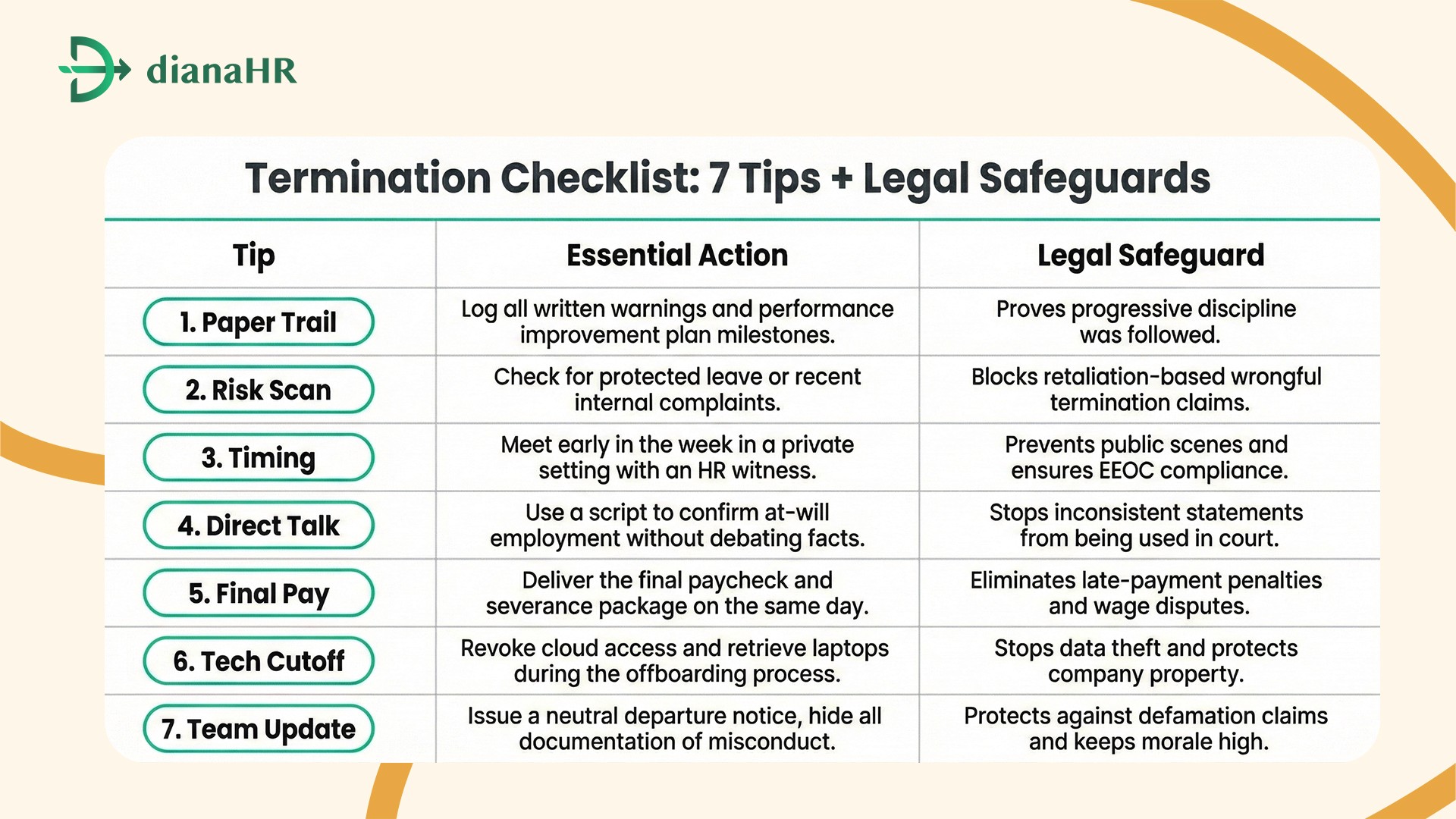
7 Tips for Terminating an Employee Gracefully At a Glance:
The Most Common Mistakes in the Employee Termination Process That Trigger Lawsuits
Small errors in the employee termination process lead to massive legal headaches. Even well-meaning managers make mistakes that invite wrongful termination claims.
1. Inconsistent Policy Enforcement Across Similar Cases
Courts side with workers when you handle the same behavior differently. If one person gets a pass for being late but you are terminating an employee for the same issue, it looks like bias. Always check that your rules apply to everyone regardless of their background.
2. Skipping the PIP or Progressive Discipline Step
Firing someone for performance without a performance improvement plan is risky. Unless it involves gross misconduct, you need a record of warnings. Skipping these steps makes terminating an employee look impulsive and unfair to a jury.
3. Not Involving HR or Legal Before a High-Risk Termination
High-risk cases, like those involving EEOC compliance or recent leave, need an extra pair of eyes. Failing to consult legal experts before terminating an employee is a top mistake that triggers expensive lawsuits.
"Document as if you'll need to justify your decision to a skeptical jury someday.": HR consultant, 2025.
Correcting these procedural gaps prevents your business from becoming a legal target.
How DianaHR Can Help You Manage the Employee Termination Process With Confidence
DianaHR is an AI-powered HR-as-a-Service platform that simplifies terminating an employee for growing businesses. By combining intelligent automation with expert guidance, it helps you reduce HR costs by 60% and stay within EEOC compliance across 40+ states.
Special Capabilities:
AI-Driven Compliance: Automates state-specific final pay rules for wrongful termination claims prevention.
Human-in-the-Loop: Pair with a dedicated specialist to handle your documentation of misconduct and termination letter drafts.
Seamless Integrations: Works with Gusto, ADP, and Rippling to sync your offboarding process instantly.
Smart Task Automation: Saves 15+ hours weekly on complex employee termination process administrative tasks.
Transform your HR into a streamlined, data-driven operation. Explore how DianaHR simplifies terminating an employee today.
Conclusion
Terminating an employee is never easy, but doing it without a clear plan is dangerous. Many managers struggle with missing documentation of misconduct or inconsistent progressive discipline records.
These gaps leave your business vulnerable to wrongful termination claims that can lead to bankruptcy or permanent brand damage. One legal misstep during the offboarding process could cost you hundreds of thousands in settlements. You cannot afford to guess on EEOC compliance.
DianaHR replaces this uncertainty with a structured, automated system. We help you manage every exit with legal precision, protecting your business from the catastrophic costs of a mishandled departure.
Connect to DianaHR today to secure your business and streamline your employee exits.
FAQs
1. What is the right way to terminate an employee to avoid a lawsuit?
The best way to avoid wrongful termination claims is through consistent documentation of misconduct. Follow a clear employee termination process that includes progressive discipline and an HR witness. Always provide the final paycheck on time to ensure full EEOC compliance during the exit.
2. What are the most common legal mistakes during the employee termination process?
Many employers fail the employee termination process by skipping a performance improvement plan. Other mistakes include ignoring at-will employment limits or firing someone after protected leave. These errors trigger wrongful termination claims and expensive legal battles that damage your brand.
3. Do you legally have to give a reason when terminating an employee?
While at-will employment often allows firing without cause, providing a clear reason protects you. Use your documentation of misconduct to explain the decision. This transparency prevents wrongful termination claims by proving your employee termination process was fair and not discriminatory.
4. What should be included in a termination meeting?
A proper meeting covers the termination letter, the effective date, and the final paycheck timeline. Discuss the offboarding process, including COBRA compliance and returning property. Keeping the talk brief and factual helps prevent wrongful termination claims and maintains professionalism.
5. When is a severance package required when terminating an employee?
Federal law doesn't require a severance package, but offering one helps minimize wrongful termination claims. Ensure the agreement follows EEOC compliance and includes a release of claims. This step is a standard part of a safe offboarding process for many businesses.
6. How should HR communicate a termination to the rest of the team?
Keep your message neutral and avoid sharing any documentation of misconduct. Briefly announce the departure and explain the next steps in your offboarding process. This protects the privacy of the person leaving while preventing rumors that lead to wrongful termination claims.
Share the Blog on: